Force-Plate Data Reveals a Five-Step Sequence to Add Swing Speed
By Staff Writer
3 min read

LoopGolf
A golf-instruction method built on force-plate data breaks the speed-generating swing into five sequential pressure shifts, using a flywheel motion to link the takeaway, backswing load and release into a single chain of energy.
How does ground force create club speed?
Clubhead speed comes from two sources working together: the arms and hands applying force to the club, and the ground pushing back against the feet to amplify that force. When the two are out of sync, speed is hard to find. When they move in sequence, the swing produces more speed with less visible effort.
The sequence was developed from data gathered on thousands of high-swing-speed golfers using Swing Catalyst force plates, which measure how pressure shifts across the feet during the swing.
What are the five steps to build speed?
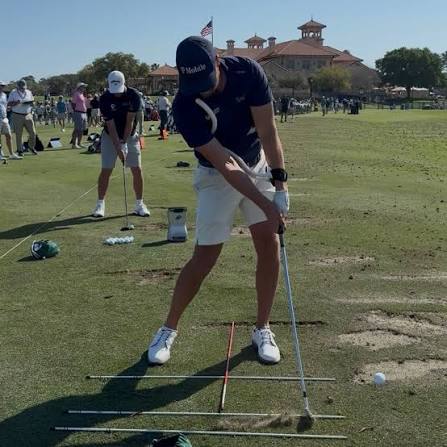
The method starts with a wide, centered stance, arms extended and the clubhead hovering off the ground, feet carrying maximum contact with the ground before the swing begins.
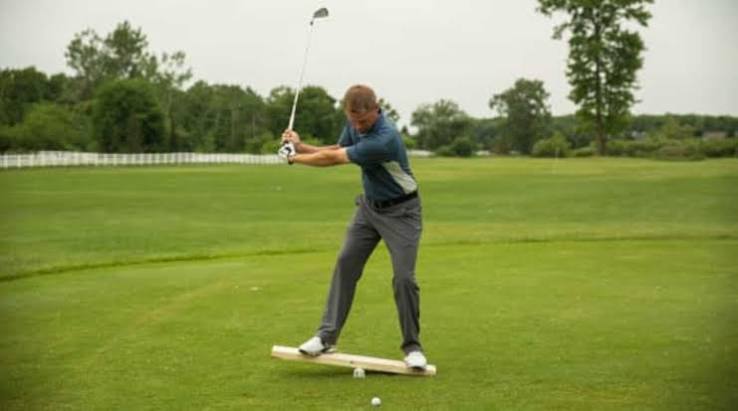
From there, pressure shifts toward the trail foot by only an inch or two — described as a load, not a sway — while the upper body stays connected to the arms and hands. That load lets the torso rotate over a planted trail leg, twisting against the hips to store energy, the way winding a spring builds tension before it releases.
At the top of the backswing, the body should feel momentarily lighter as the ground pushes back, before pressure lands on the lead foot to start the downswing. The lead side then extends and pulls upward, clearing the hips and releasing the stored energy out through the clubhead to the finish.
Decelerating the hands before impact, not speeding them up, is what sends the clubhead through the ball at full speed.
Why does slowing the hands add speed?
The method's signature idea runs against instinct: golfers who want more speed are told to decelerate their hands just before impact rather than accelerate them. The effect is similar to snapping a towel — slowing the handle sends the energy out to the tip. Pulling the handle through impact instead produces less speed and worse contact.
A training aid called the Speed Brake was designed around that specific feel, giving golfers a physical cue for coordinating the hands and lead side as they decelerate through the hitting area.
Key takeaways
- A five-step sequence links the takeaway, backswing load and release into one continuous chain of ground force.
- The method is built from force-plate data collected on thousands of golfers using Swing Catalyst systems.
- Decelerating the hands just before impact, rather than speeding them up, is what sends the clubhead through contact fastest.
- A wide, centered stance with a one- to two-inch pressure shift toward the trail foot sets up the load.
- A training aid called the Speed Brake is built specifically to teach golfers that deceleration feel.
Frequently asked questions
What is a ground reaction force in golf?
It's the force the ground exerts back against a golfer's feet as they push into it, measured with force plates. Amplifying that force through the right pressure shifts adds clubhead speed without extra muscular effort.
What does "loading the trail side" mean in a golf swing?
It refers to shifting pressure onto the trail foot early in the backswing so the upper body can rotate against a stable base, creating torque between the hips and shoulders that stores energy for the downswing.
Why would a golfer want to decelerate their hands before impact?
Slowing the hands transfers momentum out to the clubhead, similar to how snapping a towel sends energy to its tip. Accelerating or pulling the hands through impact instead tends to reduce speed and worsen contact.
What is the Speed Brake training aid?
It's a device built to help golfers feel the hand deceleration that precedes a fast release, coordinating the lead side and hands through the hitting area.
- swing speed
- driver swing
- ground reaction force
- swing mechanics
- force plates
- downswing sequence
- speed brake training aid